Little Sister and Cinderella: the mock-guide finale
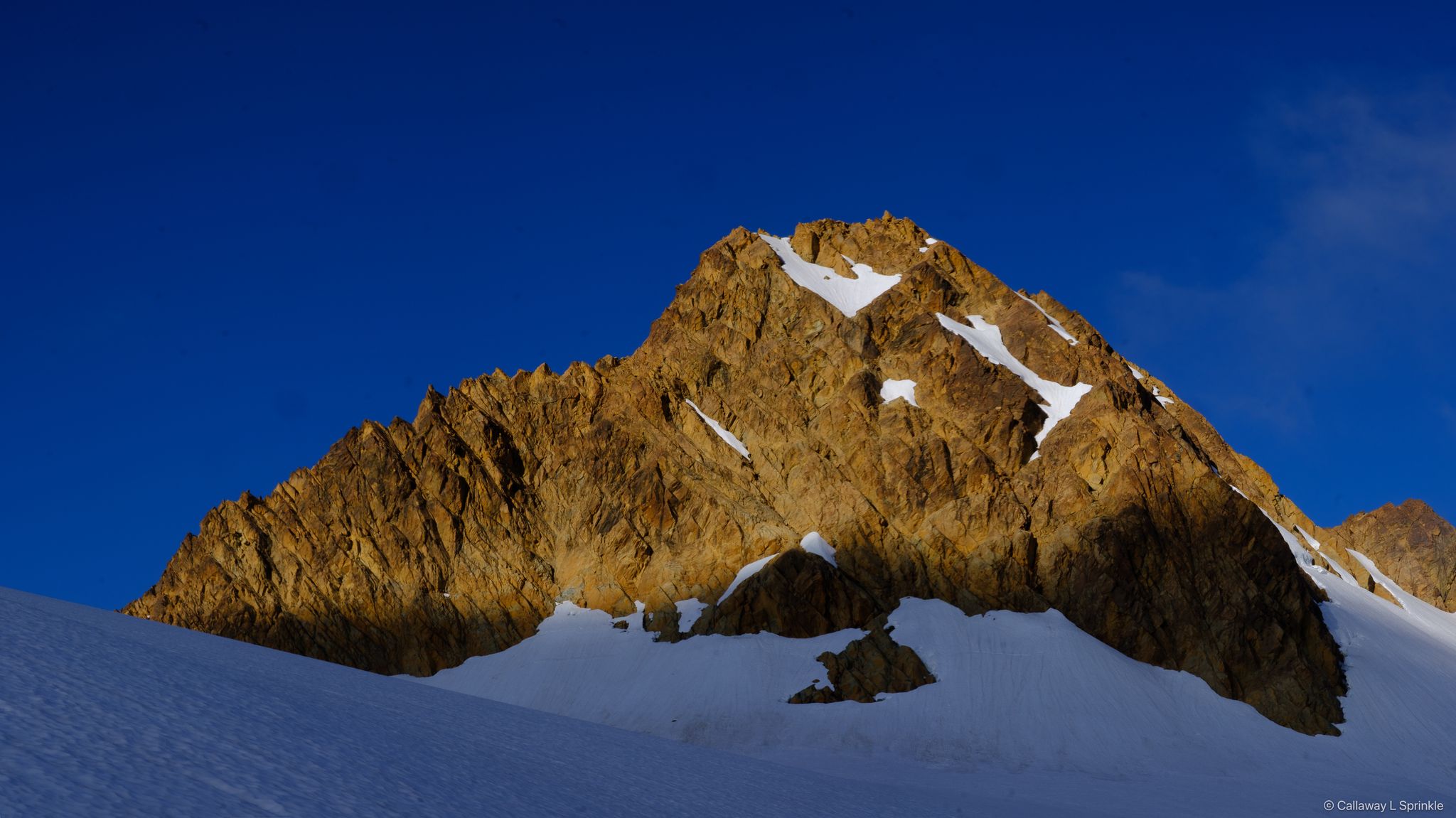
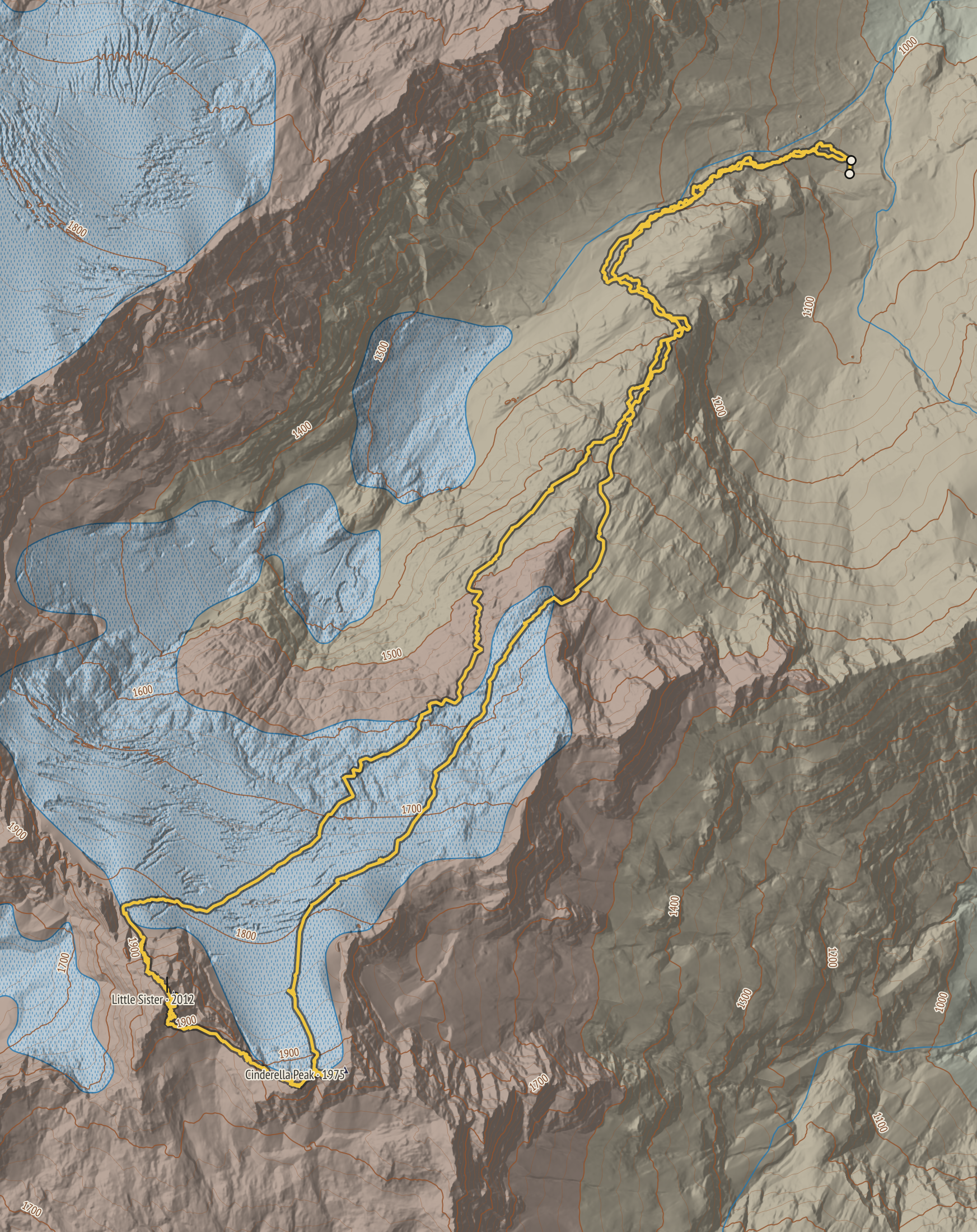
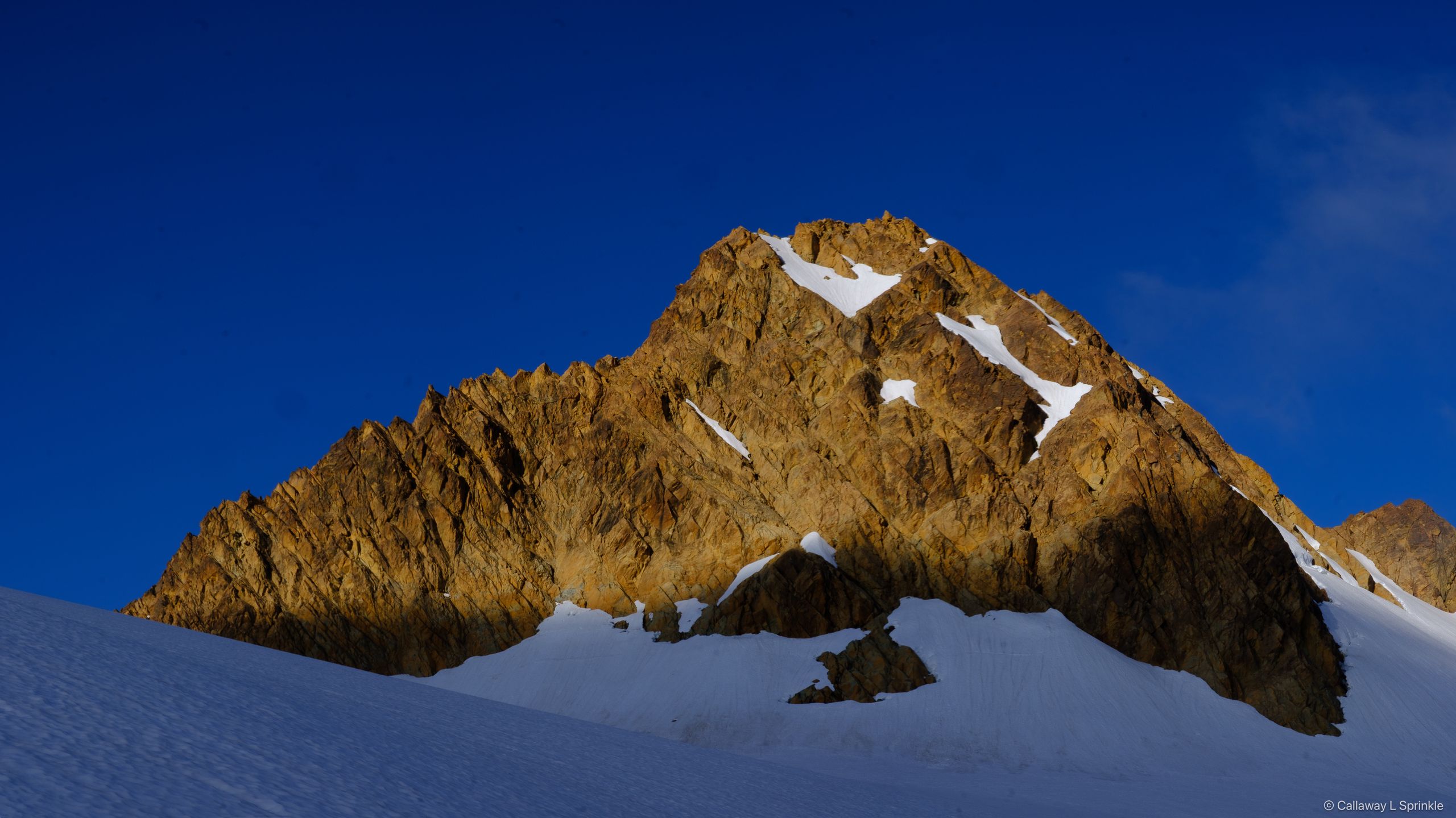
For the final climbing day of AAI’s AMTL 2, the roles flipped: Joel — who had spent two weeks instructing us — became the client, and I became the guide. Objective: the north face of Little Sister in the Twin Sisters Range, then a traverse to Cinderella, as a subsection of the larger Green Creek horseshoe. The Twin Sisters are a geological oddity — one of the largest exposed olivine massifs anywhere — and the rock climbs like rough-cast iron: featured, grippy, and hungry for skin.
In
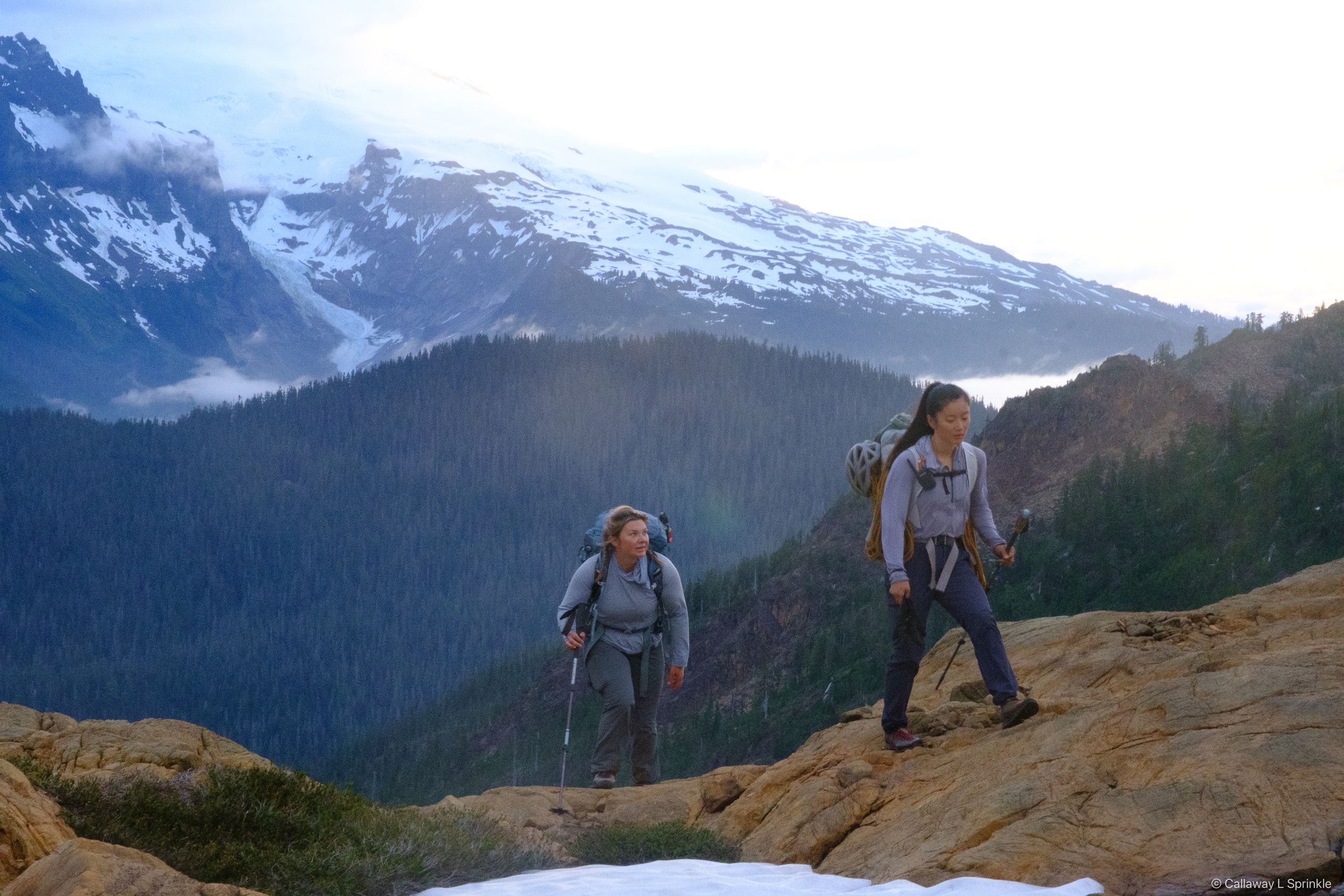
Aimed to leave camp at 4:30; managed 4:45. An hour and a half on rock and heather to the snowline, crampons on, another hour and a quarter to the glacier, then roped travel to the moat at the base of the north face. Climbing by 10:00.
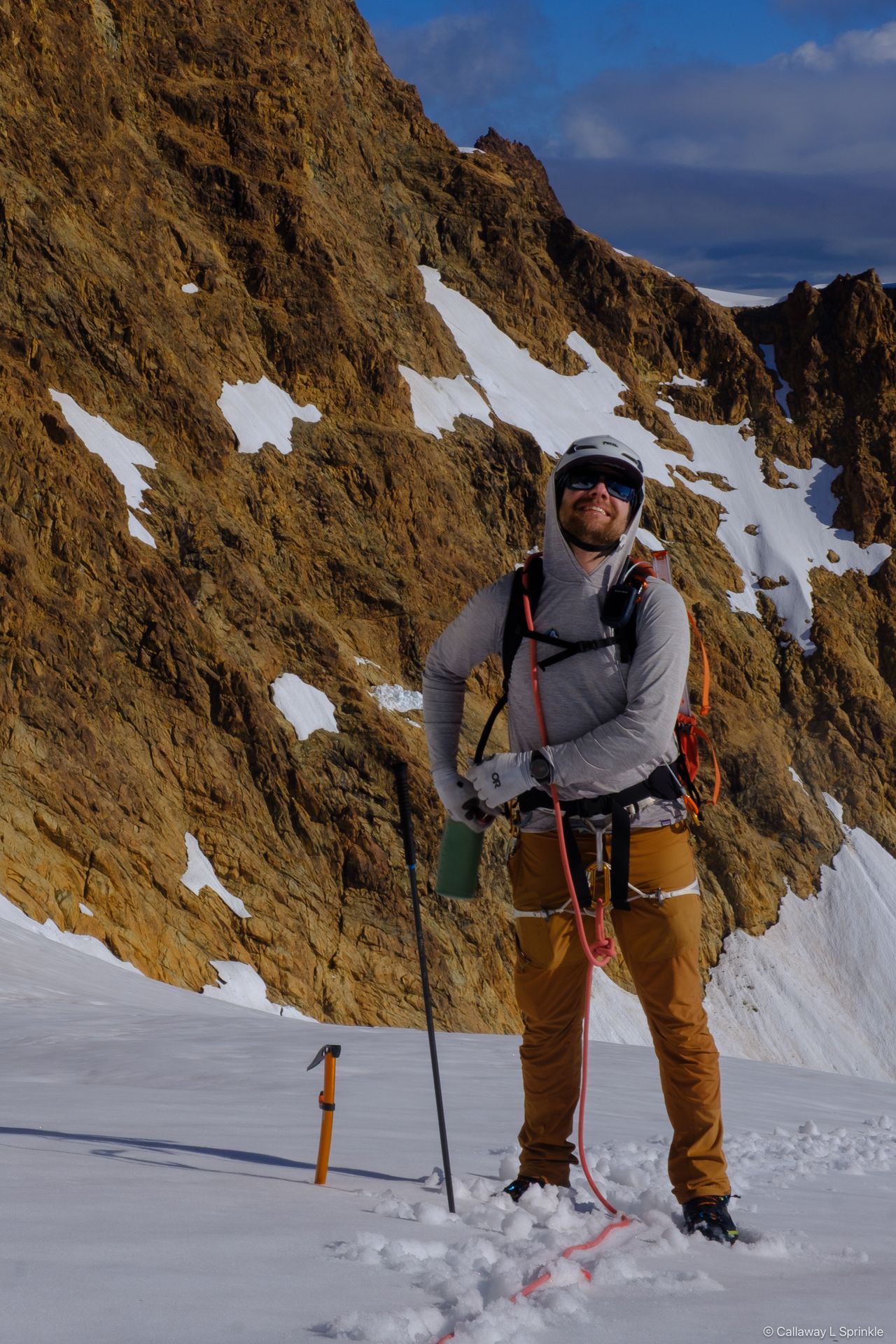
Five pitches of olivine
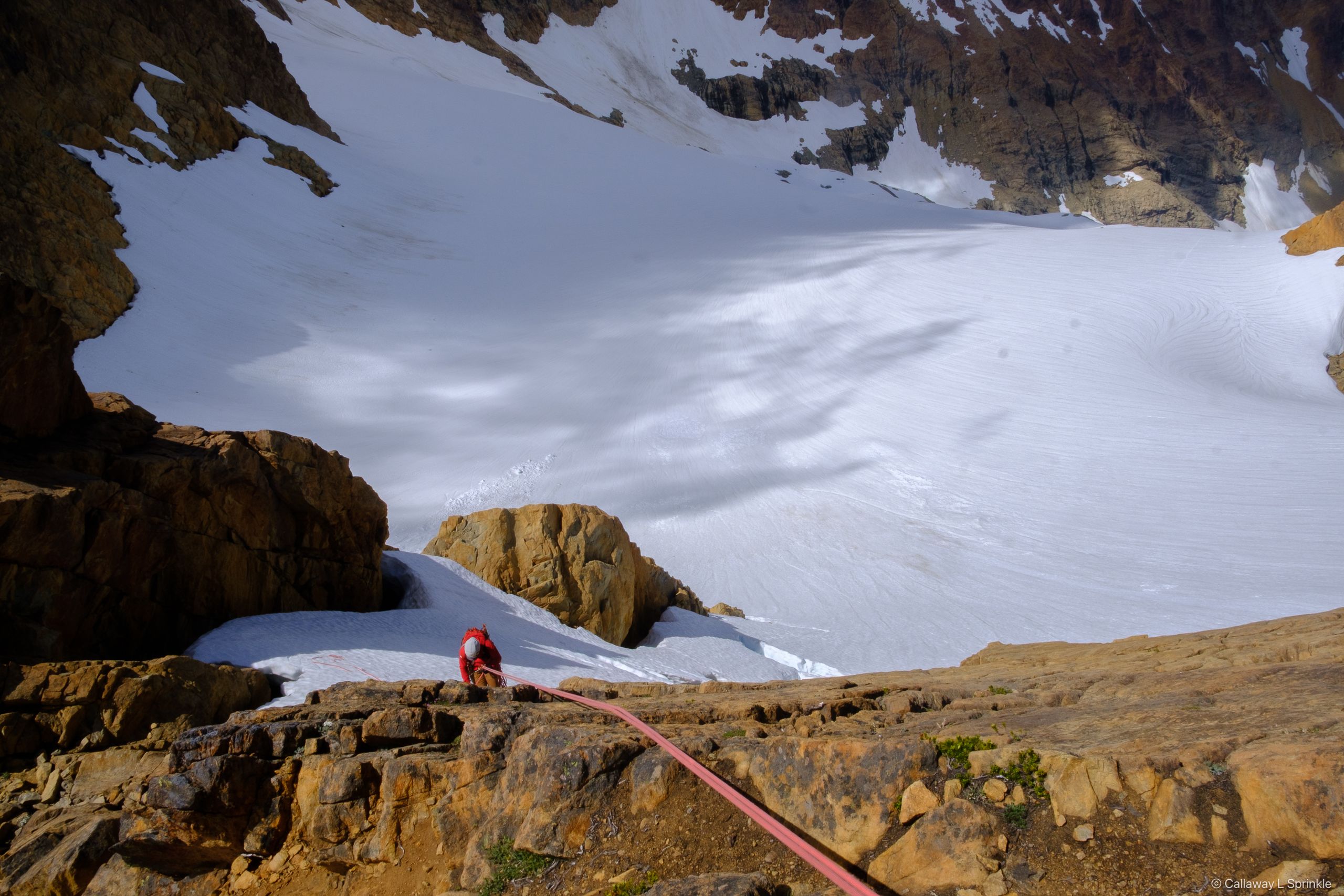
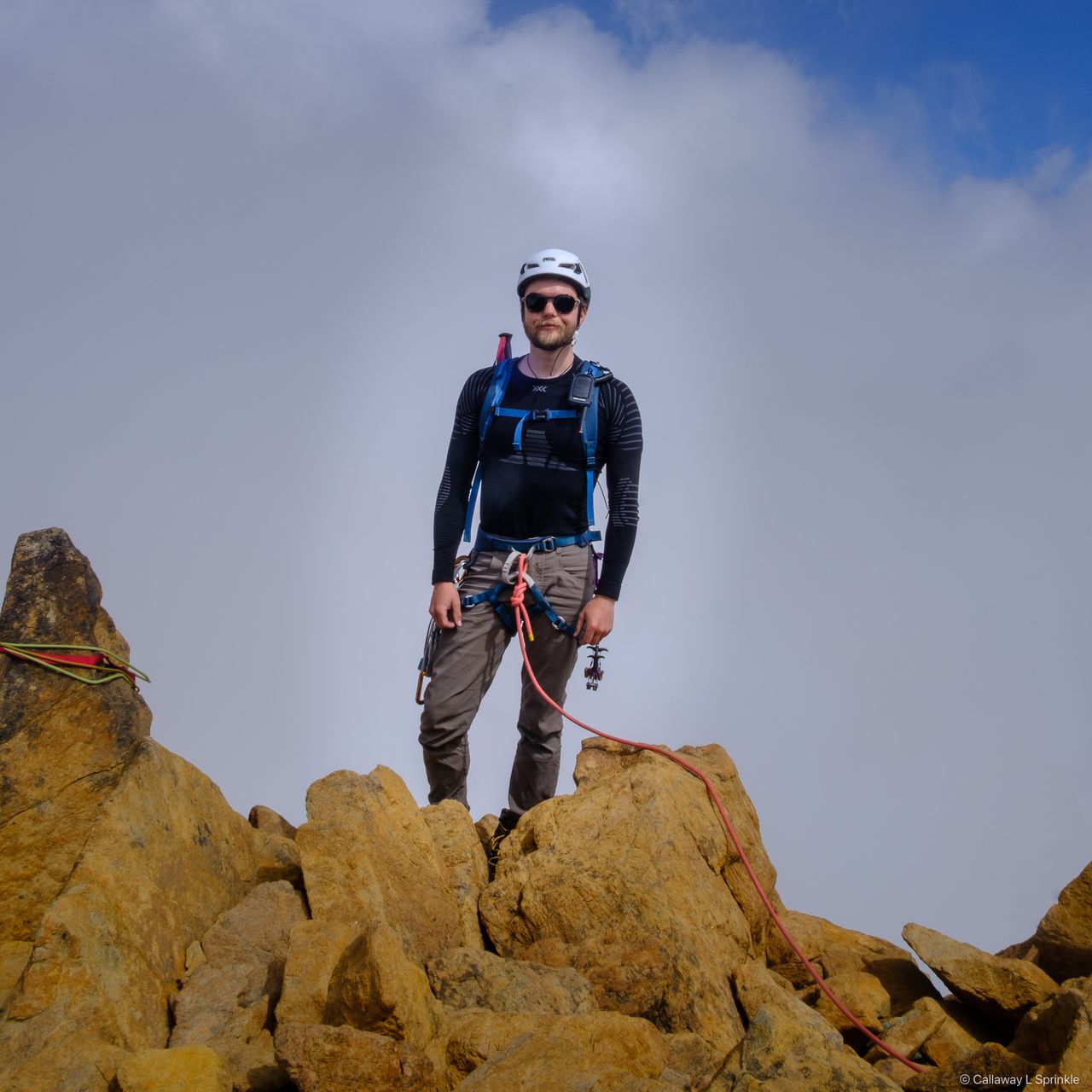
The first belay decision was the day’s most consequential: pitch 1 (~25 m) went straight up the rib we’d gained across the moat, specifically to clear out from under a bank of hanging snow up-route — anchor at the first solid stance, belay Joel up, minimise the minutes anyone spent in the runnel. Pitch 2 (~30 m) finished the rib to where it flattens into the main face. Pitch 3 was the money pitch: ~50 m of steady, solid, generously protected climbing, stopped five metres shy of rope’s end at an adequate ledge. Pitch 4 (~30 m) topped out the wall from a gendarme stance, and pitch 5 (~30 m) crossed a small rock saddle onto the true summit wall and up to the rock-pile on top. Summited at noon, an hour ahead of the guide-plan I’d sketched.
Down, across
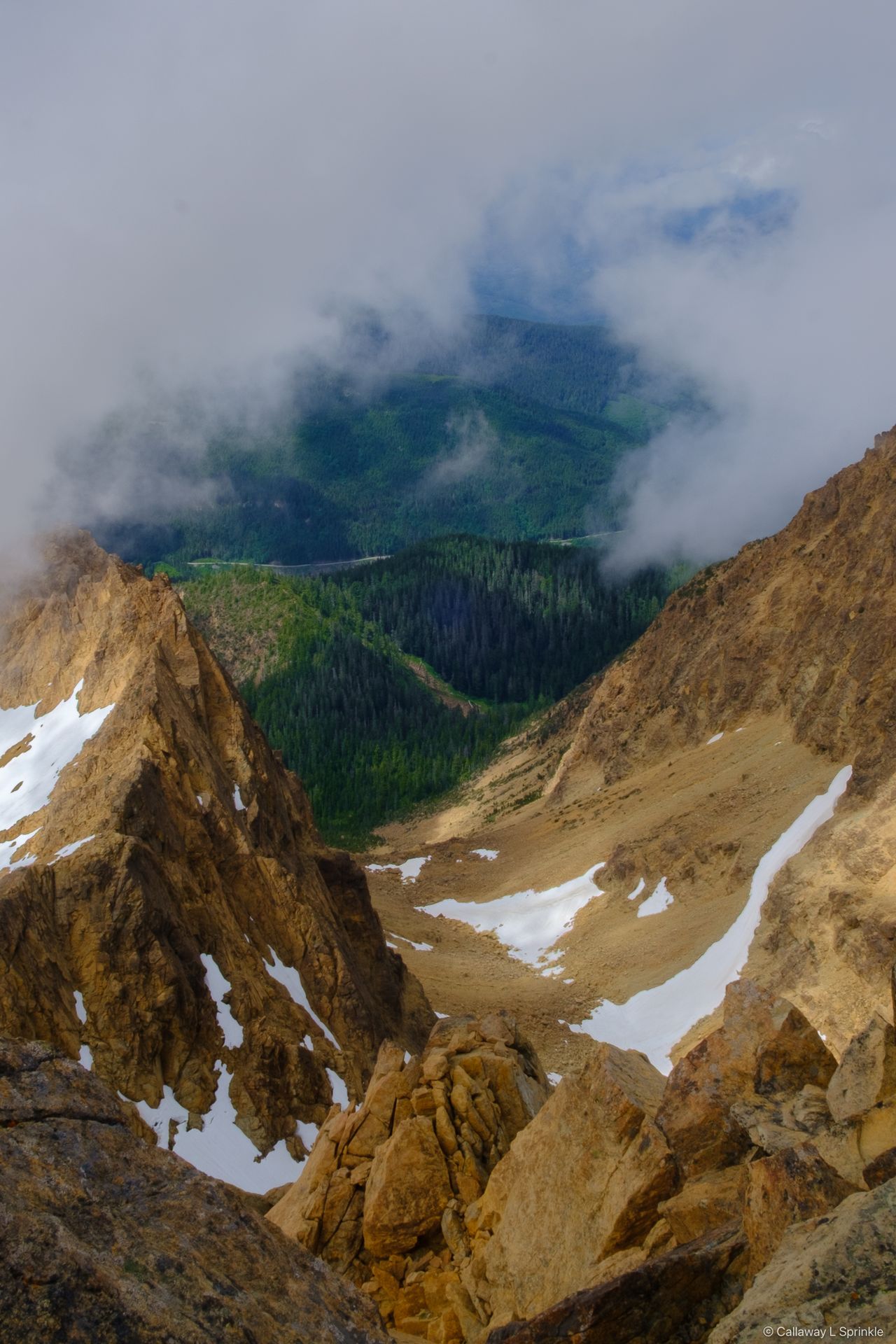
The descent off Little Sister is a fourth-class gully system on the southwest face — managed as a mix of simul-scrambling and short-roping, with hip belays and the odd placement at three steps where the exposure warranted it. Half an hour of care brought us to snow; a glissade and a walk gained the saddle between Little Sister and Cinderella.
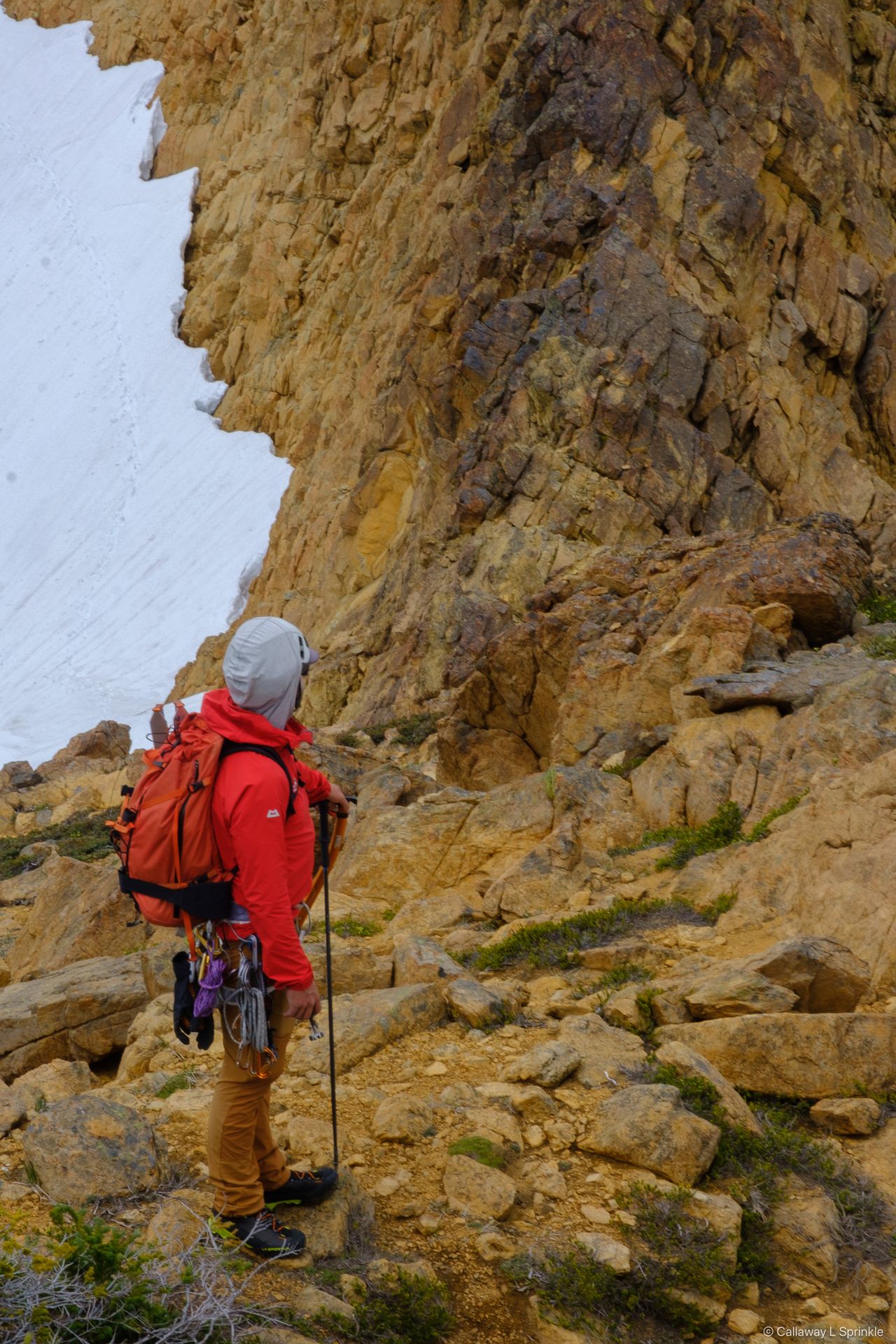
At the saddle we spent half an hour coordinating with another AAI party climbing Little Sister by the west ridge, offering to relocate their snow gear so they could descend our line rather than reverse the exposed ridge. They eventually declined — their climb, their call — and we set off for Cinderella.
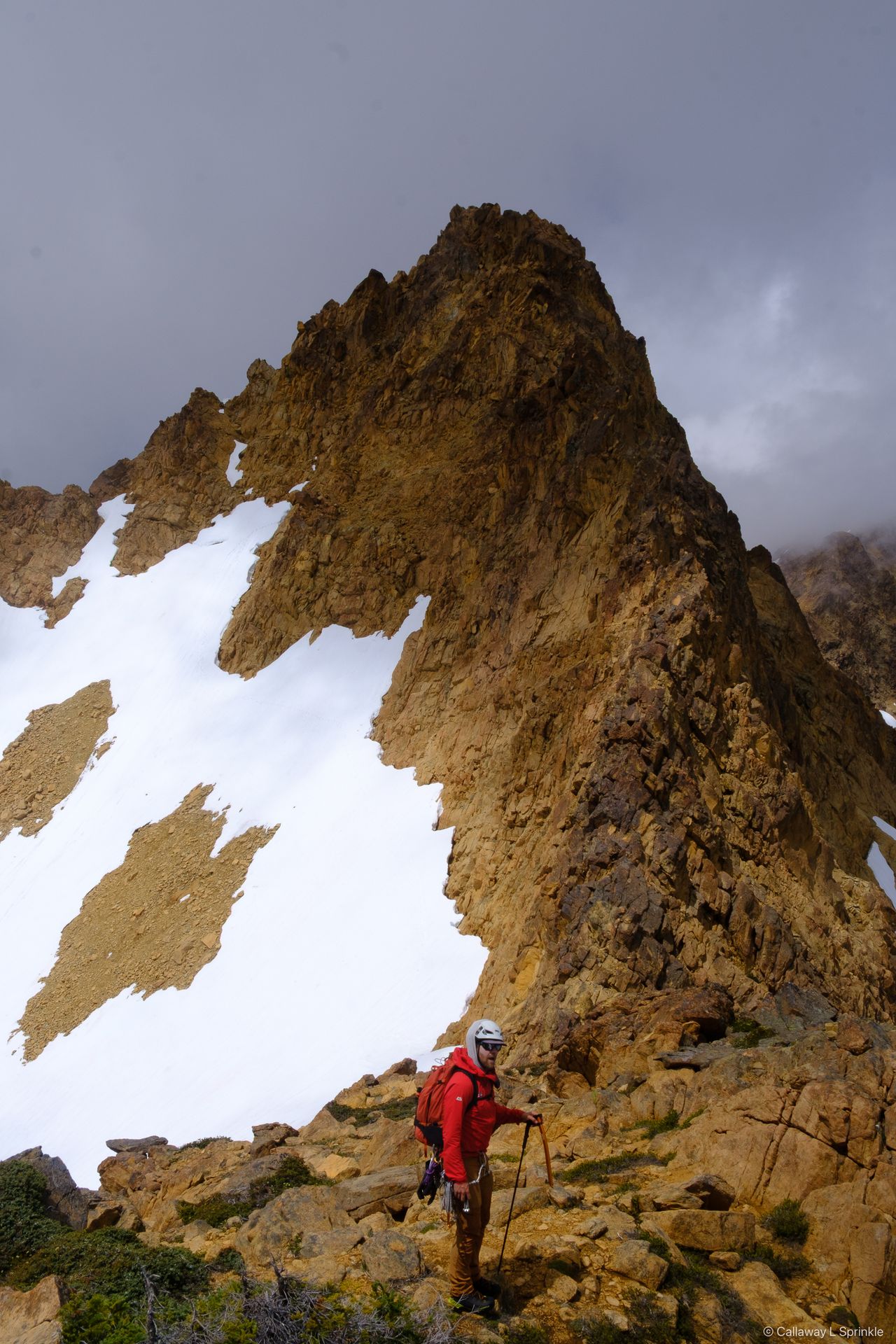
Snow still hung on parts of Cinderella’s north face, so we kept to the ridge: a fourth-class section short-roped, then a fifth-class traverse pitch to the true summit, and a reversal of that pitch back to the rappel station we’d scoped on the way up.
The anchor worth rebuilding
Closer inspection of that station was the day’s best teaching moment: two micronuts in cracks — going nowhere, but not confidence-inspiring either. We left one of AAI’s nuts (Joel’s discretion) and, together with a cordelette we’d recovered from a horn on the Little Sister descent, built a proper equalised three-piece. Joel rappelled first — his idea to use the moat in the gully below as an anchor: some digging with the axe, the rope rigged behind the accumulated snow, and the second rappel cleared the bergschrund clean.
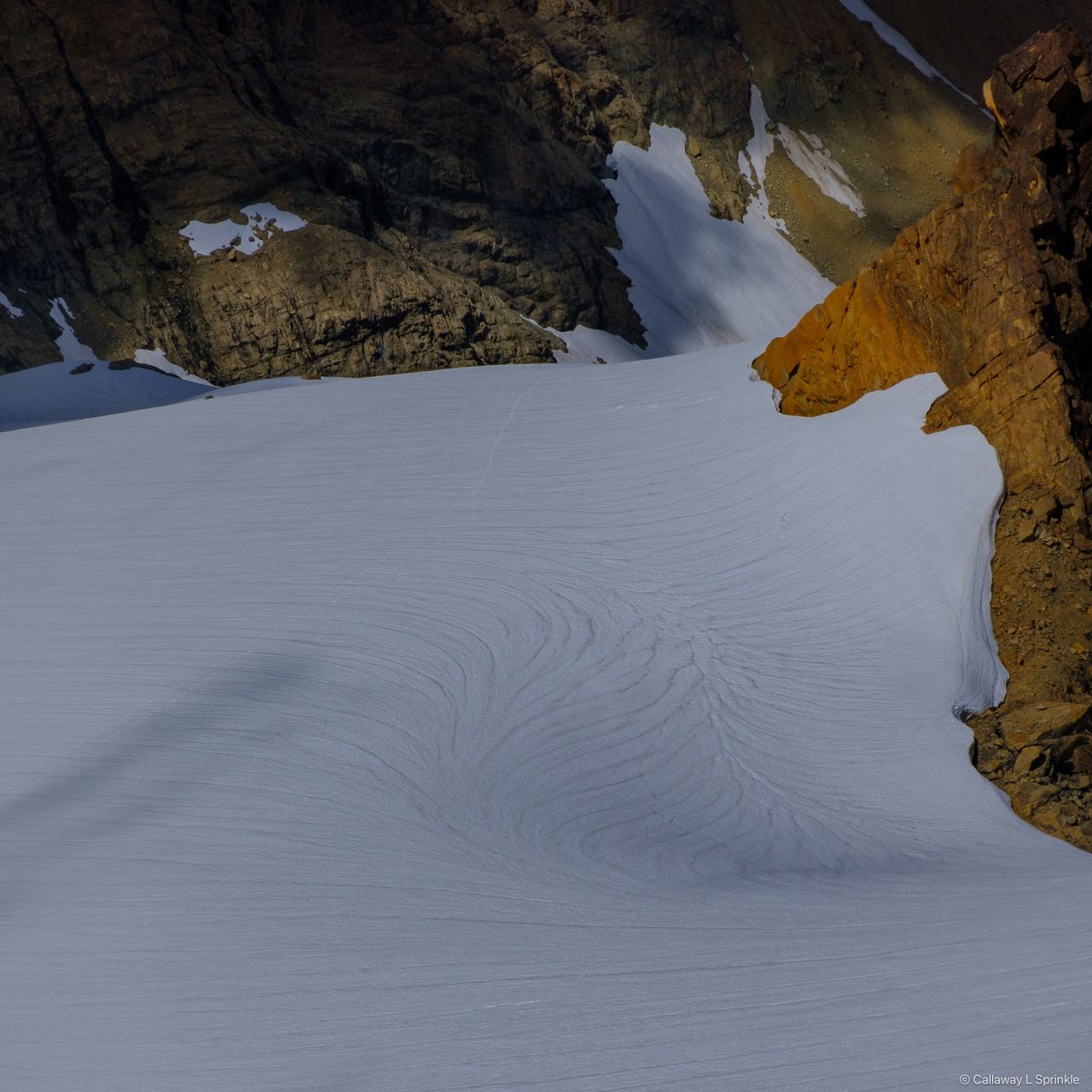
From below the bergschrund we re-roped for glacier travel, waited a few minutes to rejoin the other party, and descended together into the evening.
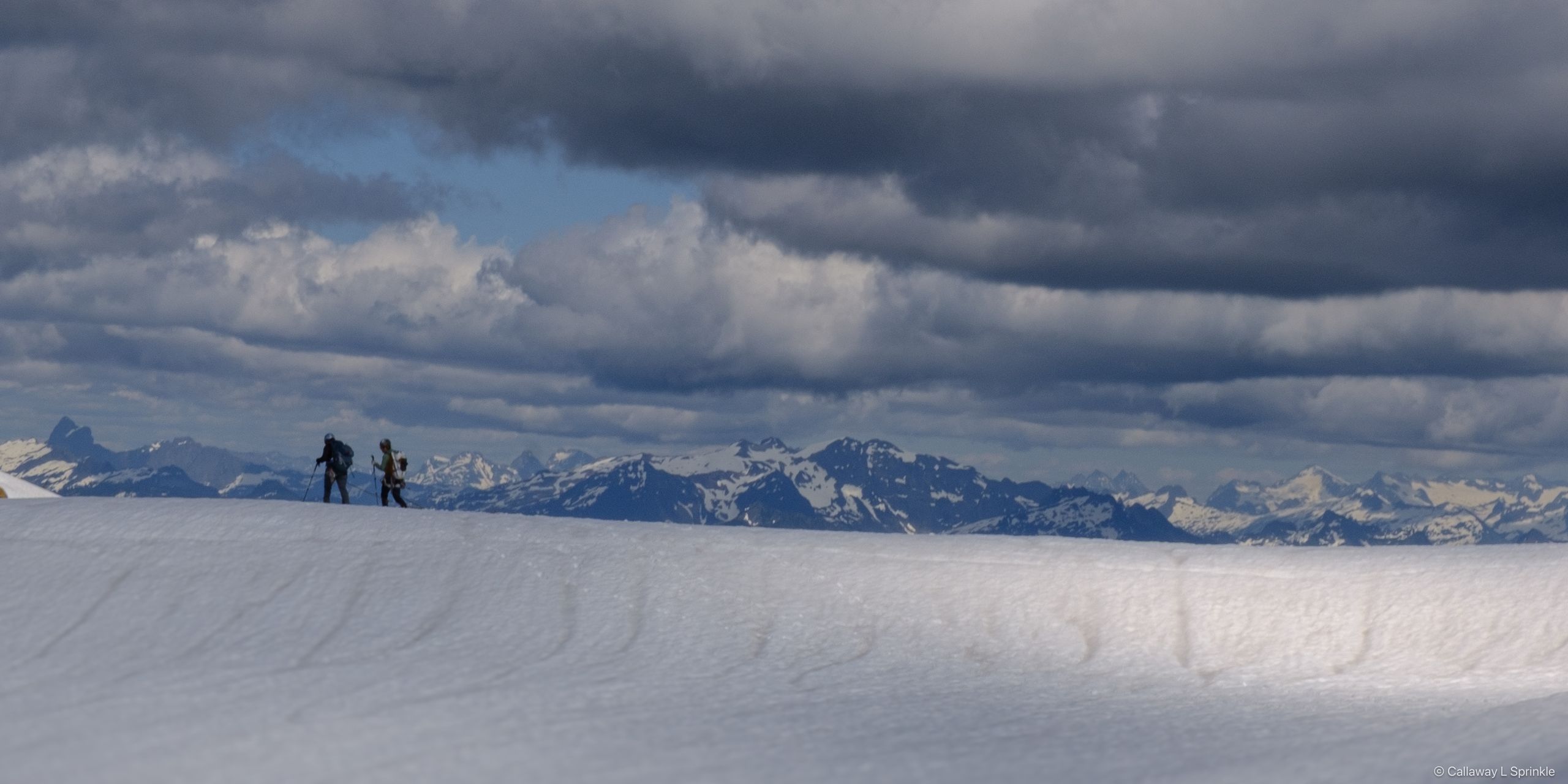
What the day was actually testing
Not the 5.6 — the decisions. Where the belays went and why; how long we lingered under hanging snow (as little as possible); when the rope came out on the descent and when it stayed away; whether an in-place anchor got weighted on faith or rebuilt on evidence; how two parties negotiated shared terrain. Thirteen hours of the job being mostly judgment, with some climbing attached — which is, I’m told and increasingly believe, the correct ratio.
Thanks to Joel for two weeks of patient instruction, and for playing the client with enough mischief to make the rehearsal honest.